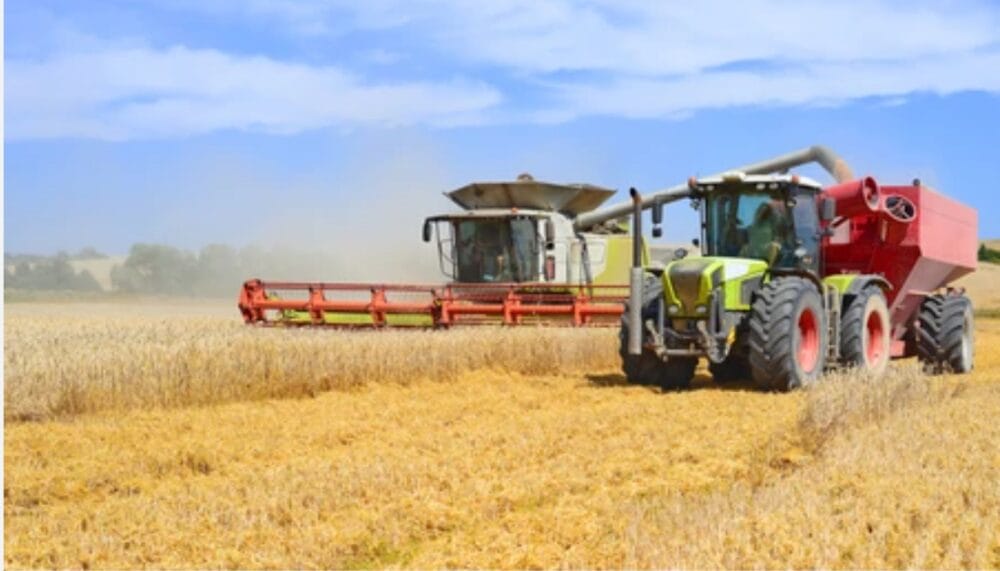
Machinery Used in Agriculture
Agriculture has evolved significantly over the years, shifting from traditional manual practices to advanced mechanised farming. Agricultural machinery plays a vital role in increasing productivity, reducing labour dependency, saving time, and improving crop quality.
From land preparation to harvesting and post-harvest management, machines have become essential tools for farmers worldwide. In this blog, we explore the top 10 machinery used in agriculture and how they contribute to efficient and sustainable farming.
Table of Contents
1. Tractor
The tractor is the backbone of modern agriculture. It is a versatile machine used for ploughing, tilling, planting, hauling, and powering other farm equipment. Tractors come in various sizes and horsepower ranges, making them suitable for small, medium, and large farms. With attachments like ploughs, harrows, and seed drills, tractors significantly reduce manual labour and increase farm efficiency.

2. Plough
Ploughing is the first step in crop production, and ploughs are essential for loosening and turning the soil. Modern ploughs include moldboard ploughs, disc ploughs, and chisel ploughs, often operated using tractors. They help improve soil aeration, control weeds, and incorporate crop residues into the soil, creating an ideal seedbed.

Also Read :Top 10 Advantages of Biological Fertilizer
3. Harrow
After ploughing, harrows are used to break soil clods, level the field, and prepare a smooth seedbed. Disc harrows, spike tooth harrows, and spring tooth harrows are commonly used in agriculture. Harrowing ensures uniform soil texture, which improves seed germination and crop growth.
4. Seed Drill
A seed drill is a precision machine that sows seeds at the correct depth, spacing, and rate. This ensures uniform plant growth and reduces seed wastage. Seed drills improve crop yield by providing optimal growing conditions and are widely used for cereals, pulses, and oilseeds.
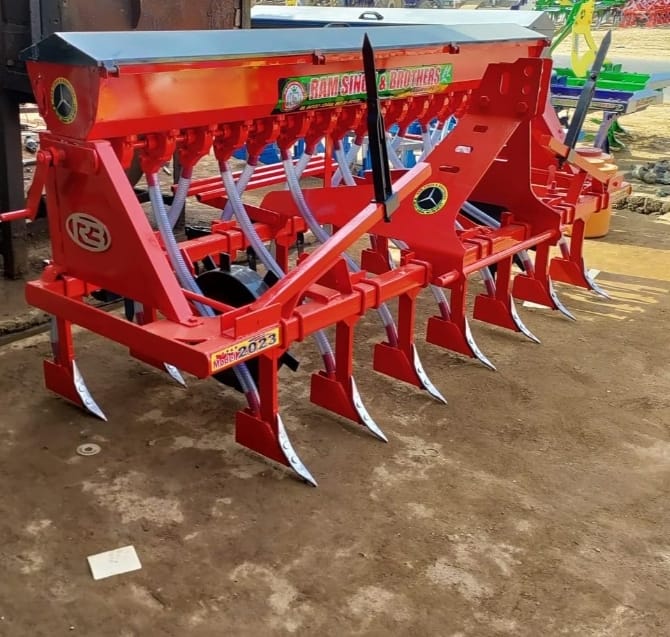
5. Cultivator
Cultivators are used for secondary tillage and weed control. They stir the soil without turning it completely, helping remove weeds and improve soil structure. Cultivators also help mix fertilizers into the soil and conserve soil moisture. Tractor-mounted cultivators are common in modern farming.
Also Read: Top 10 Benefits of Organic NPK Fertilizers for healthy plants
6. Sprayer
Sprayers are used to apply fertilizers, pesticides, herbicides, and fungicides to crops. They ensure even distribution of chemicals, protecting crops from pests and diseases. Sprayers can be manual, power-operated, or tractor-mounted, making them suitable for farms of all sizes.
7. Irrigation Pump
Water management is critical in agriculture, and irrigation pumps play a key role in supplying water to fields. These pumps can be diesel, electric, or solar-powered. Irrigation pumps support various irrigation systems such as drip, sprinkler, and flood irrigation, ensuring crops receive adequate water throughout their growth cycle.
8. Combine Harvester
A combine harvester is one of the most advanced agricultural machines. It performs multiple tasks such as reaping, threshing, and winnowing in a single operation. Combine harvesters are widely used for crops like wheat, rice, maize, and barley. They save time, reduce grain loss, and lower labor costs during harvesting.
9. Thresher
Threshers separate grains from harvested crops such as wheat, paddy, and pulses. While combine harvesters perform threshing automatically, standalone threshers are still widely used by small and medium farmers. Threshers improve efficiency, reduce grain damage, and save labor compared to traditional manual methods.
10. Baler
Balers are used to collect and compress crop residues such as straw, hay, and fodder into compact bales. These bales are easier to store, transport, and use as animal feed or biofuel. Balers help manage agricultural waste effectively and contribute to sustainable farming practices.
Importance of Agricultural Machinery
The use of modern agricultural machinery offers several benefits:
- Increases crop productivity and farm income
- Reduces dependency on manual labor
- Saves time and operational costs
- Improves precision and efficiency
- Supports large-scale and commercial farming
With the growing demand for food and limited labor availability, mechanization is essential for the future of agriculture.
Frequently Asked Questions (FAQ)
1. Why is agricultural machinery important?
Agricultural machinery improves farming efficiency by reducing labor, saving time, increasing productivity, and ensuring better crop management.
2. Which is the most essential machine for farmers?
The tractor is considered the most essential agricultural machine due to its versatility and ability to operate multiple implements.
3. Is agricultural machinery suitable for small farmers?
Yes, many machines are available in compact and affordable versions suitable for small and marginal farmers.
4. What is the role of a combine harvester?
A combine harvester performs harvesting, threshing, and winnowing in one operation, saving time and reducing crop losses.
5. How does a seed drill benefit farmers?
A seed drill ensures uniform seed placement, proper depth, and spacing, which improves germination and crop yield.
6. Are solar-powered agricultural machines effective?
Yes, solar-powered pumps and equipment are eco-friendly, cost-effective, and ideal for areas with limited electricity access.
7. What machinery is used for weed control?
Cultivators and sprayers are commonly used for weed control in agricultural fields.
8. How does mechanization affect farm income?
Mechanization increases productivity and reduces costs, leading to higher profitability for farmers.
Conclusion
Agricultural machinery has transformed farming into a more efficient, productive, and sustainable practice. From tractors to harvesters, each machine plays a crucial role in different stages of crop production.
Adopting the right agricultural machinery not only improves yields but also supports farmers in meeting the growing global food demand. Investing in modern farm equipment is a key step toward the future of agriculture.Also Read: Blue Tea Benefits: Top 8 advantages and uses